For businesses seeking liquidity services
Give your shareholders liquidity without giving up control.
Unlock liquidity for shareholders through controlled trading events. Catalist helps companies run secondary trading events, so investors, employees and new supporters can buy and sell, with prices set in a fair, orderly and transparent market.
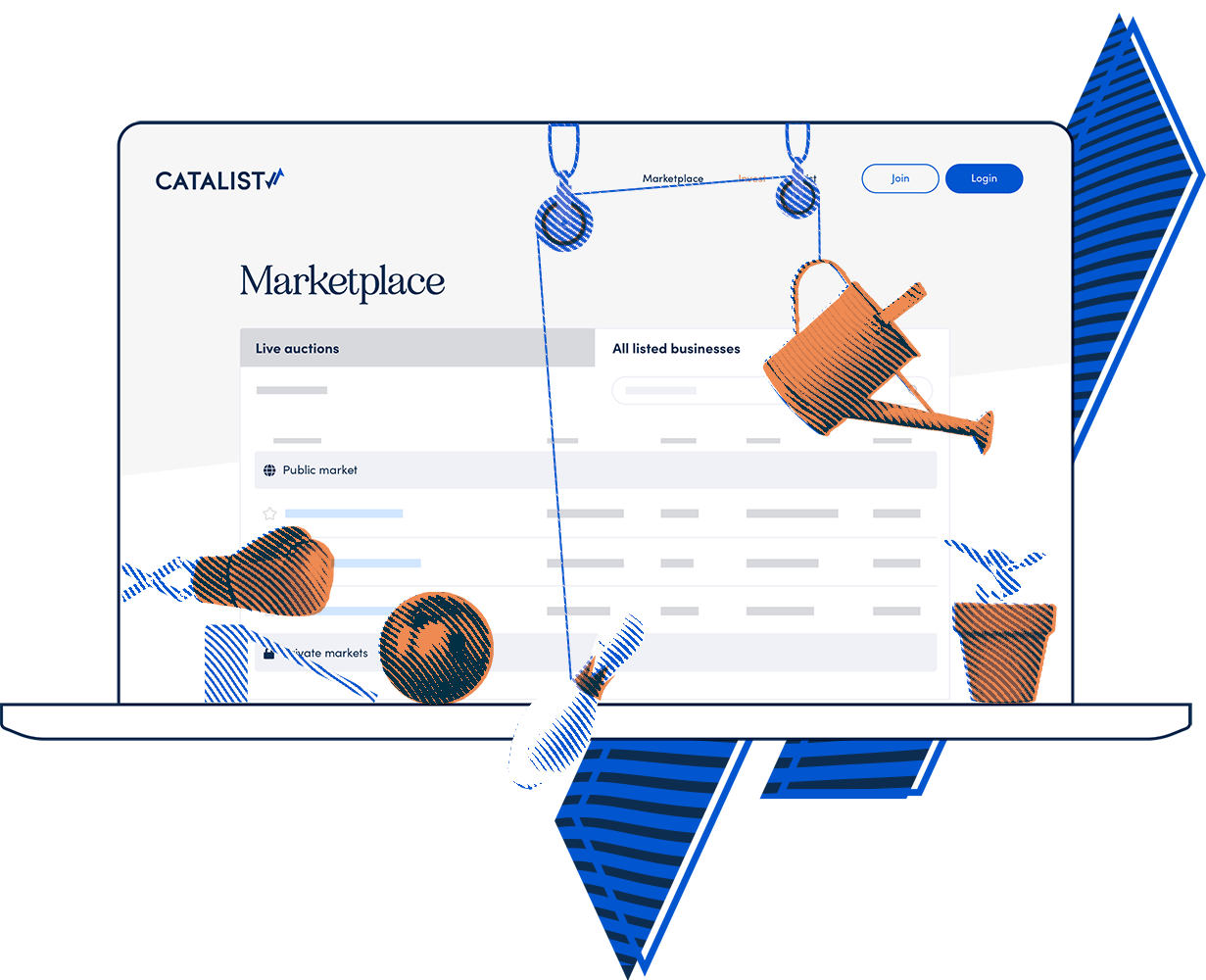
How secondary market trading works
Two pathways to access liquidity.
Structured Liquidity Programme
Begin your liquidity journey with our Structured Liquidity Programme (SLP), designed for businesses new to secondary trading, companies where pre-emptive rights apply, or where seller interest may initially exceed buyer demand. Refresh your cap table with investors aligned to your growth, while building a credible share price for future raises.
Sellers set their price
Shareholders set how many shares they'd like to sell and their minimum price. Sellers can then choose to match the lowest offer, which protects against a race to the bottom. No one is forced to sell below their own price.
Shares offered to buyers
Buyers are offered shares from the lowest price up, so the cheapest shares sell first. Existing investors get priority where pre-emptive rights apply, and any remaining shares may then be offered to new investors.
Open Market Auction
Our Open Market Auction (OMA) uses the same proven approach as the opening auction on major stock exchanges, adapted for growth businesses. Buyers and sellers submit anonymous orders at their chosen prices, and all bids and offers are brought together to set a single clearing price, which is the price at which the most shares can trade.
Every successful buyer and seller trades at that same price, so no one gets a better deal for being quicker or better connected. Automated features, such as auto orders, pre-closing rules and compliance checks, keep trading fair, orderly and transparent. Bringing buyers and sellers together at one time builds stronger demand and gives the company and its investors a credible market price.
How trading works
Why we use periodic auctions.
Unlike traditional stock exchanges, which mainly trade continuously, all secondary trading on Catalist happens through periodic auctions. Prices are set through processes designed and regulated to be fair, orderly and transparent.
Read more about our marketplace mechanicsShares in smaller companies don't trade often. On a continuous market, buyers and sellers rarely arrive at the same time, so orders sit unmatched and prices can swing on a single trade. Periodic auctions bring everyone together at set times, concentrating demand so more shares can trade at a fair price.
Every successful buyer and seller trades at the same price, set by all the orders in the auction. There's no gap between buying and selling prices, a single large order has far less impact on the price, and no one can profit by trading ahead of it. The result is a fairer price for every investor.
Periodic auctions aren't new. Major stock exchanges use them to open and close trading each day, and some markets use them exclusively for less frequently traded shares. Combined with features that discourage last-minute gaming, they build a stable, orderly market over time, making your shares more attractive to investors and future capital raises easier.
Know your investors
You choose who has access to your market.
Access settings control who can see your information and who can trade. You can limit trading to existing holders, open it to wholesale investors, or, through a Public Market listing, make your investment opportunity available to retail investors across New Zealand.
Catalist Public Market
List on a licensed and regulated stock exchange where retail investors across New Zealand can buy and sell, giving you the widest pool of potential investors.
Catalist Wholesale Markets
Open your market to new wholesale investors alongside your existing ones. Our regulatory approvals mean wholesale certification, transfers and settlement happen online, without the paperwork that usually comes with secondary trading.
Catalist Private Markets
Trading is open only to your existing investors and anyone you invite. It's a simple way to give your network a chance to buy and sell, with flexible rules to suit your business. Private companies often use it for staff share trading, or when founders want close control over who becomes an investor.
Before you start
Is a trading event right for you?
A few questions to consider. If these apply to your business, it may be worth exploring your options on Catalist.
Get in touchEarly investors, founders, angels, former staff and estates often need a way to realise some or all of their investment. A trading event gives them a fair and orderly way to sell, while you stay in control of when trading happens, who can buy and what information investors receive, rather than dealing with ad hoc private sales.
Over time, some shareholders become less engaged, while others would like to increase their holding. Staff, customers and new supporters may also want to come on board. A trading event lets you bring in investors aligned with your growth, while building a credible share price that can support future raises and employee share schemes.
A trading event is a chance to show investors how the business is progressing. Before each event, you'll share an update so everyone trades on the same information. Companies that communicate well tend to see stronger demand and fairer prices, and our tools make it simple to do.
Listing documentation
To raise from retail investors on Catalist, you’ll need to list on the Catalist Public Market. The documents, policies and guidance below apply only to Public Market listings, not to Wholesale or Private listings.
